Senior Dog Storm Anxiety Hiding and Medication Vet Plan for 2026
A vet-aware plan for older dogs that hide during thunderstorms: safe-room setup, symptom logs, medication questions, bathroom timing, and escalation signs.

This guide is current as of 2026-07-01. A senior dog that hides during thunderstorms is not being stubborn; the dog may be managing noise sensitivity, pain, cognitive change, vision or hearing loss, past panic, or a medication timing problem. The practical goal is to make the next storm boring: one prepared room, one symptom log, one veterinary question list, and one household rule that nobody experiments with old sedatives or human medication.
The plan below is written for normal households, not clinics. It does not diagnose anxiety and it does not replace a veterinarian. It gives you a safer way to observe what happens, reduce avoidable triggers, and know when to escalate before the dog is panting under a bed where nobody can reach them.


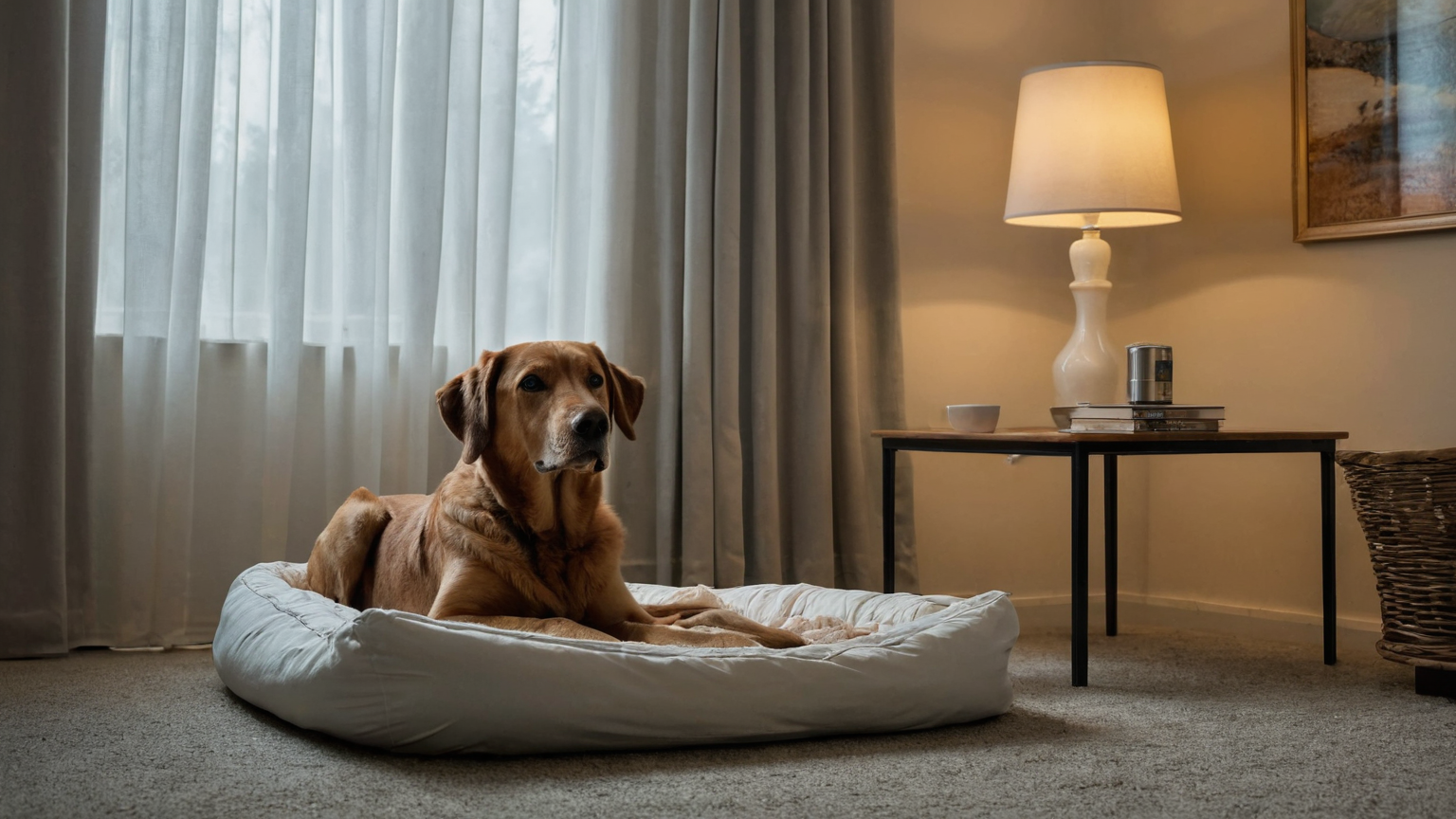

Decision table
| Situation | First action | Do not do | Escalate when |
|---|---|---|---|
| Dog hides early | Open the prepared room and reduce stimuli | Drag the dog from a hiding place | Breathing, injury, collapse, or panic persists |
| Medication question | Call the veterinary team with the log | Use old or human sedatives | Side effects or new senior-dog symptoms appear |
| Storm forecast | Practice the room before thunder | Wait until panic starts | The dog cannot settle after rehearsal |
Start with the hiding pattern, not the noise forecast
Write down where the dog hides, how quickly the dog recovers, whether the dog eats a high-value treat, and whether bathroom behavior changes. Senior dogs often hide in the same narrow space because it muffles sound or supports sore joints. That does not mean the space is safe. Block gaps behind appliances, remove cords, and make a reachable den with a bed, water, and traction. If the dog has arthritis, add a low-entry bed instead of asking them to jump onto a couch during panic.
Practical checkpoint: keep the action small enough to finish today, record the outcome, and leave a clear note for the next person who may need to help. This keeps the plan useful under stress instead of becoming a long article nobody can apply.
Build the storm room while the sky is clear
Choose an interior room or corner that has the fewest windows. Close curtains before thunder starts, add a fan or white-noise machine with no bright display, and place familiar bedding there for several calm evenings. Practice five-minute stays with treats before a storm day. The rehearsal matters because a new crate or new room introduced during the storm can feel like a trap. Keep ID tags, leash, towel, and the clinic phone number outside the door so nobody searches the house during lightning.
Practical checkpoint: keep the action small enough to finish today, record the outcome, and leave a clear note for the next person who may need to help. This keeps the plan useful under stress instead of becoming a long article nobody can apply.
Medication questions for the veterinary team
Ask the clinic whether the dog needs an exam before any storm-season medication, how far before a predicted storm a dose is meant to be given, what side effects should trigger a call, and whether kidney, liver, heart, pain, or cognitive conditions change the plan. Do not combine leftover prescriptions from a fireworks plan with over-the-counter products unless the veterinarian explicitly approves the combination for this dog. The FDA approval history for canine noise-aversion medication is useful context, but it is not a dosing instruction.
Practical checkpoint: keep the action small enough to finish today, record the outcome, and leave a clear note for the next person who may need to help. This keeps the plan useful under stress instead of becoming a long article nobody can apply.
Bathroom and escape prevention
Take the dog out before the storm line arrives, using a leash even in a fenced yard. Panic can turn a normally reliable dog into an escape risk. During the storm, skip optional bathroom trips unless the dog clearly needs one and the route is safe. After the storm, check paw pads, nails, teeth, and the face for injuries from digging, chewing, or squeezing through furniture. Update the log while details are fresh.
Practical checkpoint: keep the action small enough to finish today, record the outcome, and leave a clear note for the next person who may need to help. This keeps the plan useful under stress instead of becoming a long article nobody can apply.
When hiding becomes a medical escalation
Escalate if the dog collapses, has labored breathing, gums look pale or blue, cannot stand, injures themselves, trembles for a long period after the storm, refuses water, has repeated vomiting/diarrhea, or becomes newly disoriented. Also call if the pattern changes abruptly in an older dog. Storm fear can coexist with pain, cognitive dysfunction, endocrine disease, or medication interactions, so the safest plan is to report the pattern rather than only asking for stronger sedation.
Practical checkpoint: keep the action small enough to finish today, record the outcome, and leave a clear note for the next person who may need to help. This keeps the plan useful under stress instead of becoming a long article nobody can apply.
Checklist before you close this tab
- Confirm the owner of the next action and the deadline.
- Save evidence in one folder rather than scattered screenshots.
- Use official sources for medical, security, financial, or platform rules.
- Keep private information out of public forums and screenshots.
- Revisit the plan after the first real-world use and remove steps that did not help.
FAQ
Is this professional advice?
No. Use it as a planning checklist and confirm medical, veterinary, security, legal, workplace, or financial decisions with the relevant professional or official channel.
Why so much documentation?
Documentation reduces repeated calls, prevents contradictory instructions, and makes it easier to escalate without relying on memory.
What is the AdSense-readiness angle?
The page is written to solve a specific user problem with sources, caveats, practical tables, and privacy-safe wording rather than thin volume content.
One-week follow-up
After using the plan once, review what was confusing, what took too long, and what depended on a single person being available. Improve one item: a phone number, a folder name, a permission setting, a refill note, or a recovery test. The value of the plan is not perfection on day one; it is making the next stressful event less chaotic and better documented. Repeat the review monthly during the relevant season or whenever your tools, insurer, clinic, employer, device, or household routine changes.